What you can learn from Budweiser’s Super Bowl 2012 ad

In case you haven’t seen it yet, Budweiser’s Super Bowl ad—slated to run only on the Canadian broadcast of the main event–has gone viral in a big way online.

Here’s the setup.

Two amateur Canadian hockey teams think they’ve been invited to be part of a documentary. Instead they’re treated to a mega flash-mob and get to live out what every kid who plays hockey (or any sport, really) dreams of.

It closes with “Good times are waiting. Why not grab some buds.”

A lot of people have liked it on Facebook, tweeted it and +1’d it on Google+.

You don’t have to enjoy beer or hockey to connect with the message behind the ad.


Okay, not everyone liked it…

The National Post’s Andrew Coyne, for one, was unmoved.

“What exactly is the ad’s point?” he tweeted.

That led to this polite exchange…


exchange between Andrew Coyne and Patrick Gant

Dialogue on the point to the Bud ad. Andrew Coyne is a great guy who isn


I’m not the kind of guy who is going to square off on Twitter with one of Canada’s best-read journalists (I’m a fan, too, Andrew). I’m not that dumb. Plus if you follow Coyne on Twitter, you know that debating the guy on social media can be brutal. Ask Tony Clement about that.

But Coyne raises some interesting points. There are things we all can learn from the obvious success of a beer company’s pre-emptive ad spot.

Advertising is in the selling business.

First, ads are made to sell things. This is obvious.

Many like to pretend that they are immune to selling or that selling is a dirty word. Or that we see through the gimmick.

Here’s what I know as a copywriter and as someone who has been in business for over 10 years.

There are just two kinds of selling.

The kind that works and the kind that doesn’t.

All selling that works shares a common mastery: the ability to be persuasive.

Being persuasive isn’t about being pushy.

Persuasion comes from the Latin word persuas, which means “convinced by reason.”

The curious thing about it is we’ve come to learn through psychology and neuromarketing that persuasion has as much to do with connecting emotionally as it does with reason.

So the meaning has changed from its Latin roots. English is funny that way.

Noted psychologist and author Robert Cialdini says there are six principles of persuasion.

Reciprocity
Commitment
Authority
Scarcity
Social proof and
Liking

Those last two are an important part of what makes the Bud spot so effective.

They’re not pushing beer in the ad. They don’t even show the product (other than the logo).

The ad is about an idea that connects with people on an emotional level.

When people like how they feel about something, they tell others.

You don’t need to advertise.

I know what you’re thinking right now: “What? Are you insane? You’re a copywriter…you can’t say that!”

Of course I can.

Advertising isn’t for everybody.

It’s very powerful if you can afford it and if you find smart people to help you who know the difference between being clever and being effective.

But it’s not for everyone.

That’s why it costs what it does.

Even Budweiser has figured this out.

Their spot isn’t going to run on US channels during the Super Bowl. It doesn’t have to.

By being pre-emptive and by using social media, their message—highly emotional, likeable and memorable, powered by an enormous amount of social proof—is already out there.

It’s why Scott Stratten wisely concluded today that Budweiser just won the Super Bowl and the internet. I agree.

More than products, people are open to ideas.

When you have good ones—ones that you share through the dual channels of reason and emotion—they often stick.

Not always.

But when they do, you know.

headshot of patrick gantAbout the author: Patrick Gant is a writer & speaker. He owns thinkit creative, a company that specializes in writing and editing digital content for the web. Follow him on twitter here.

CreativeBoost gives you valuable updates about unlocking the power of writing that sells. It's free. Join today.

Important choices you need to make if you want to write a book

Poesia
Photo: thebbp on flickr

As a business professional, a published book can be one of the most powerful tools in your personal marketing arsenal. Not only does it deliver value to your readers by sharing what you know on a subject, you directly benefit, too.

It can elevate your profile as an authority on the topic you write about. It can reveal your passion. And if your book is really well-written, it also gives people a sense of what you’re like as a person, both on a personal and professional level.

But there are choices to make. Click to continue

headshot of patrick gantAbout the author: Patrick Gant is a writer & speaker. He owns thinkit creative, a company that specializes in writing and editing digital content for the web. Follow him on twitter here.

CreativeBoost gives you valuable updates about unlocking the power of writing that sells. It's free. Join today.

Brand and disruption

Your brand establishes expectations that form the reasons why people choose to buy from you versus someone else. Those expectations aren’t just things you promise and deliver on. Nor is it limited to what your brand looks like, or how it’s packaged.

Your brand defines how people feel about you.

A good brand reminds people why they choose you again and again. Emotional connection is a hard thing to measure or to pinpoint why it does what it does. Just as important, a strong brand creates a powerful bond. There’s a risk in there for anyone hoping to engage in disruption tactics involving their brand.

It can easly backfire.

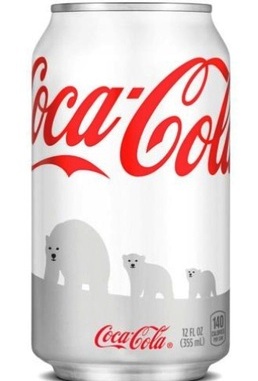
Coke found that out when they switched the colours on their iconic product to silver and white as part of a well-meaning campaign. Consumers got angry and the company abruptly ended their limited run months ahead of schedule.

Much of the blame was that it created confusion between their regular and diet products, but there’s more to it than that. The brand’s colour–Coca-Cola red–is more than just a fundamental part of the product’s design.

It turns out that it’s deeply rooted in how people feel when they buy that product. Take that away from your consumer and they’re missing part of what makes your brand what it is.

headshot of patrick gantAbout the author: Patrick Gant is a writer & speaker. He owns thinkit creative, a company that specializes in writing and editing digital content for the web. Follow him on twitter here.

CreativeBoost gives you valuable updates about unlocking the power of writing that sells. It's free. Join today.

What a highway can teach you about how to make the most out of taglines

Highway sign 2
Photo:underpuppy

Today, I want to talk to you about taglines and highways. It’s an unusual mix, but bear with me.

A tagline can be a valuable tool in marketing. When used properly, it can neatly sum up the value of your product or service with a phrase or idea that is memorable for your audience.

As a copywriter, a marketer and as a consumer, the trouble I find with many taglines is that they’re just not very effective at doing the job they’re supposed to do. They describe rather than sell. They talk about features rather than communicate in benefits. They try to say too much, or they state the obvious rather than zeroing-in on a core problem that the market has. They try too hard to be clever rather than be purposeful.

An ineffective tagline is a waste of your money and your audience’s time. And that takes me to my point about highways.

A few weeks ago, I was travelling on business and I opted to take a toll highway to get home. Like many privately owned enterprises, they took great pains to remind everyone of their tagline. So every few minutes I’d pass yet another road sign reading: “Fast. Safe. Reliable.” They had invested a lot of time and money to remind me of three obvious things that I counted on…with just about any road that I drive on, including the ones that aren’t toll roads!

Keep it simple

Remember one of thinkit creative’s top rules about writing that sells: people are busy. There’s no sense in having a wordy tagline, or one where you tell people something they already know, and that doesn’t communicate a unique benefit or value.

Here’s one of my favourite examples of doing tagline copy properly: when Apple launched the very first iPod back in 2001, their tagline didn’t talk about how the device worked or how revolutionary the design was. Instead the copy read “1,000 songs in your pocket.” So simple and yet so very focused on selling through benefits.

Remember purpose

No matter who you are, most people aren’t going to give you the time you want to explain your product or idea, let alone why they should buy it. Taglines work best when they are memorable. That’s their key purpose. Taglines aren’t the place where you explain things. It’s where you connect your product or service to a larger idea.

It’s not just about words

Don’t create a tagline just for the sake of having one. Taglines aren’t about tacking words up there beside your company logo. Taglines are about ideas. And ideas aren’t always conventional. So be willing to take chances. And stay focused on solving a key problem that your customer is facing.

Be persuasive without being salesy

No one likes to be pitched to in an overt way. In fact, there’s a growing body of research out there to suggest that poorly crafted copy can backfire when consumers sense they are in the presence of shameless sloganeering. As with all things in marketing, exercise good taste and common sense.

Sometimes you have to look harder

When it comes to copywriting, the fewer the words, the tougher the task. So where do you go looking for great taglines, elegantly crafted, that stick? Investing in professional copywriting and copyediting services can help you solve this common marketing problem. But even before you do that, it pays to dig deeper and look at who you are and what you do from your audience’s perspective.

What problem do they have that you help solve? In the case of that toll highway, a much better solution to their own business problem was found on a single sign near the end of the road, in typeface so small that a driver could barely read it. It doesn’t appear on any of the firm’s marketing collateral as far as I can tell. But its message is infinitely more effective, more memorable and more benefit-driven than all the other signage combined.

That sign simply asked the following question:

“How much time did you save taking this highway today?”

headshot of patrick gantAbout the author: Patrick Gant is a writer & speaker. He owns thinkit creative, a company that specializes in writing and editing digital content for the web. Follow him on twitter here.

CreativeBoost gives you valuable updates about unlocking the power of writing that sells. It's free. Join today.

Remembering Steve, a Switcher tells his story

With this Steve Jobssad news today, let me share with you something personal.

I was one of the people who appeared in the original batch of Apple “Switch” ads, back in 2002.

They ran for a little while on TV and elsewhere (a decade later and surprisingly it’s still not hard to find the entire series of ads on YouTube).

Back then, it was a different time for Apple. But already, you could see this was a company in the midst of a remarkable rebirth, thanks to the creative genius of Steve Jobs. I was happy to lend a hand when I emailed Apple way-back-when, explaining why I took a chance and bought that first iMac when I had launched my new company a year earlier. That email led to my involvement in the campaign, which was a lot of fun at what was for me a huge personal turning-point in life. So in many ways, I’ve always had a particular fondness for Steve Jobs and Apple.

It wasn’t just that Steve was the head of a company that made great products that helped in my own personal rebirth, building my business into what it is today. Steve set an example for so many of us: the best way to give a damn about things that matter deeply to you is to show it with great work that moves and inspires others.

Thank you, Steve.

I’ll keep giving a damn, working hard to put my own dent in the universe.

 [Update: My old friend and fellow Switcher, Pete (Damon) Wright has posted his own recollections today, too.]

headshot of patrick gantAbout the author: Patrick Gant is a writer & speaker. He owns thinkit creative, a company that specializes in writing and editing digital content for the web. Follow him on twitter here.

CreativeBoost gives you valuable updates about unlocking the power of writing that sells. It's free. Join today.

Q&A: What is copywriting, anyway?

Copywriting is the act of writing text that is used for the purposes of selling a product, service or idea.

Selling in this sense does not necessarily involve a financial transaction. Rather, it’s about being persuasive—motivating an audience to take a specific action or specific steps that you want them to take.

question burstCopywriting is a science. It is also an art.

On one hand, it relies on proven, time-honoured methods and techniques of gathering an audience’s attention, presenting a business case to them, and convincing them to respond to a call-to-action. On the artful side of the equation, it involves inventiveness and a talent for playing with words in a manner that is memorable to an audience. These two disciplines combined have the potential to inform and entertain an audience. It’s a powerful combination, when done properly.

Traditionally, a copywriter would ply his or her skills in creating direct-mail products, advertising, commercial scripts, billboards, brochures, postcards and sales letters. They often worked in partnership with musicians to develop jingles (and many still do). With the rise of online media, new products have become part of the copywriter’s domain, including web copy, banner ads, email blasts, landing pages, multimedia scripts and presentation content.

Elements of copywriting are also found in feature article writing, social media content, white papers and technical writing, in which the selling imperative isn’t as great, but the need to attract and retain a reader’s attention remains as important as ever.

[Update] Interesting fact: While copywriting has been the home of many successful writers for the duration of their careers, it has also been an important launching pad for many notable fiction authors.

headshot of patrick gantAbout the author: Patrick Gant is a writer & speaker. He owns thinkit creative, a company that specializes in writing and editing digital content for the web. Follow him on twitter here.

CreativeBoost gives you valuable updates about unlocking the power of writing that sells. It's free. Join today.

About that Old Spice Guy

The success (and utter genius) of the Old Spice Man campaign shows what can happen when the stars align in that just-right arrangement: a solid understanding of your target market, great timing, 100% client buy-in, brilliant casting, and razor-sharp creative with a thoughtful way of pulling it all together.

Great anecdote in this piece about how the actor who plays Old Spice Man found that unmistakable voicing, without which this might have just been another campaign for some kind of body wash product.

headshot of patrick gantAbout the author: Patrick Gant is a writer & speaker. He owns thinkit creative, a company that specializes in writing and editing digital content for the web. Follow him on twitter here.

CreativeBoost gives you valuable updates about unlocking the power of writing that sells. It's free. Join today.

Sticking with creative

I love treating my clients well, and one of the ways I do that is by sending little gifts periodically just to say thanks. Gift baskets with coffee or chocolates are always popular, of course, but I also try to come up with products that—more than just being tasty—are useful and memorable.

That has lead me to one of my newest gift products: custom-made postage stamps.

After all, even in this digital age, just about everyone I know still needs stamps…and just about everyone I know in business is always short a stamp or two for mail-outs. So when an envelope arrives at a client’s doorstep with a full sheet of personalized stamps (authorized by Canada Post*) ready to use, I can almost hear their cheers right across town.

The feedback I’ve received on this product has been great, and that’s included plenty of interest in learning more about how it’s done. So here’s a summary in three easy steps.

1. Visit Canada Post’s Picture Postage website. It explains all the important technical and legal points that you need to know about.

2. Choose the digital image that you want to feature on your personalized stamp. Make sure it’s a photo you own and have the legal right to feature on a stamp. A company logo might be allowed, but exercise good judgment. Remember that your client is going to want to use the stamps on their own mailouts, so make sure that it doesn’t look as though you’re putting your brand on their correspondence. My approach has been to use photos from my personal collection, but decide what works best for you.

Creating your stamp

3. Review the finished product and send to your client. When your order ships to you from Canada Post, it features a full sheet of stamps, plus a card-sized reproduction. I forward this along with a short note to my client saying thanks for their ongoing business. I also find it helpful to mention that yes, indeed, these are real stamps and valid at domestic letter rates in Canada.

* American readers take note: there’s a similar service for custom US postage available right here.

headshot of patrick gantAbout the author: Patrick Gant is a writer & speaker. He owns thinkit creative, a company that specializes in writing and editing digital content for the web. Follow him on twitter here.

CreativeBoost gives you valuable updates about unlocking the power of writing that sells. It's free. Join today.

 
Loading...
Get valuable updates. Free.